Time to Learn Guitar
From sore fingertips to barre chords, a realistic guide to the milestones every adult beginner passes on the way to playing songs.
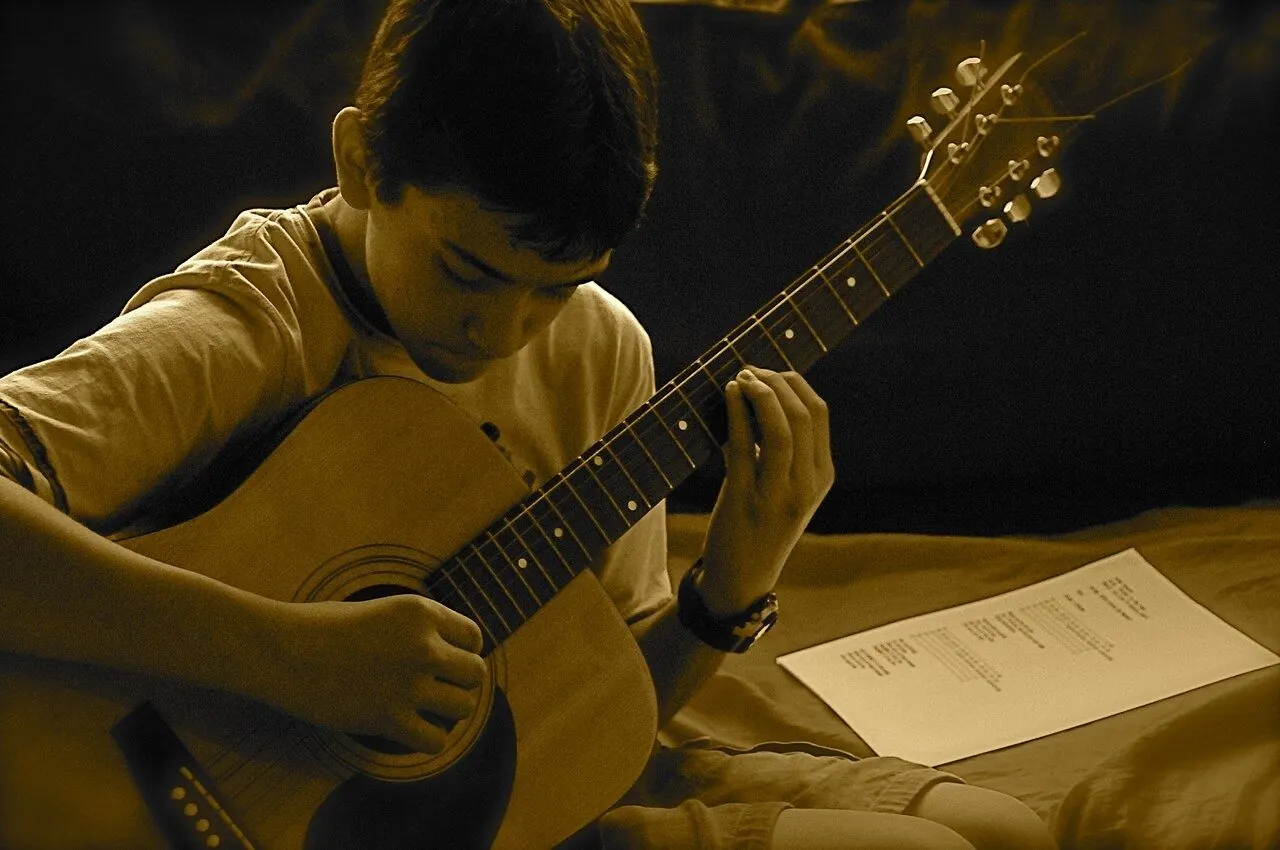
Most beginners who practise regularly can play simple songs with open chords within about three to six months, while barre chords and comfortable playing across the neck usually take one to two years. The answer, like learning most instruments, is a range of milestones rather than a single fixed timeline.
Milestones, not a stopwatch
The first weeks are about holding down the strings to make clear chords and using a strumming or picking technique to keep a steady rhythm. They are also the weeks of sore fingertips: pressing on steel or nylon strings is new to the skin, and the tenderness eases as calluses form, which on average takes two to four weeks. Short, regular sessions help the fingertips adapt without making them raw.
One common beginner milestone is that simple open-chord songs, or simplified versions of favourite songs, may become playable in about three to six months of regular practice. Changing between chords smoothly and in time is usually what takes longest at this stage.
Where barre chords fit: guitar teachers and published guides generally treat barre chords as an intermediate skill rather than something taught in the first week. Barre chords, alternate picking and techniques such as hammer-ons, pull-offs and slides are usually placed beyond the beginner stage, often somewhere between six months and two years in. Many learners hit a plateau around this point, which is a normal part of progress rather than a sign of failure.
How practice changes the timeline
Consistent, short practice helps you progress. Published beginner guides agree that regular practice counts for more than occasional long sessions: half an hour a day builds muscle memory better than a four-hour session once a week, and progress depends on total practice time rather than on the number of years since you started. A metronome, songs you genuinely enjoy and a clear goal, whether strumming round a campfire or playing lead, all help keep practice going.
Lessons and self-teaching both work. A teacher can spot bad habits early and give structure, while self-taught players rely on discipline and good online resources. On the choice of instrument, nylon strings on a classical guitar are gentler on the fingertips, and string type is one of the factors that affects how quickly early soreness passes; the right choice is usually the guitar that suits the music you want to play.
What teaching bodies say
No UK examining body publishes a universal "learn guitar in X months" figure. ABRSM, Trinity College London and RSL Awards (Rockschool) all offer graded guitar exams, and they describe progress not as a timetable but as a graded series of pieces and technical skills to meet at each level. ABRSM's guitar grades are for classical guitar, Trinity offers classical and acoustic guitar as well as separate Rock & Pop grades, and RSL covers electric, acoustic and bass guitar in contemporary styles. Working through grades is one way to measure progress, but it is not required to learn.
When you are starting as a guitar player, remember that progress comes from regular practice more than from any single deadline. Focus on one milestone at a time, from your first open chords to fluid chord changes and recognisable songs, and check the exam boards' official syllabuses if you want a structured path from beginner to Grade 8.