How to Read Music
From Every Good Boy to crotchets and key signatures, the building blocks of written music explained in plain British terms.
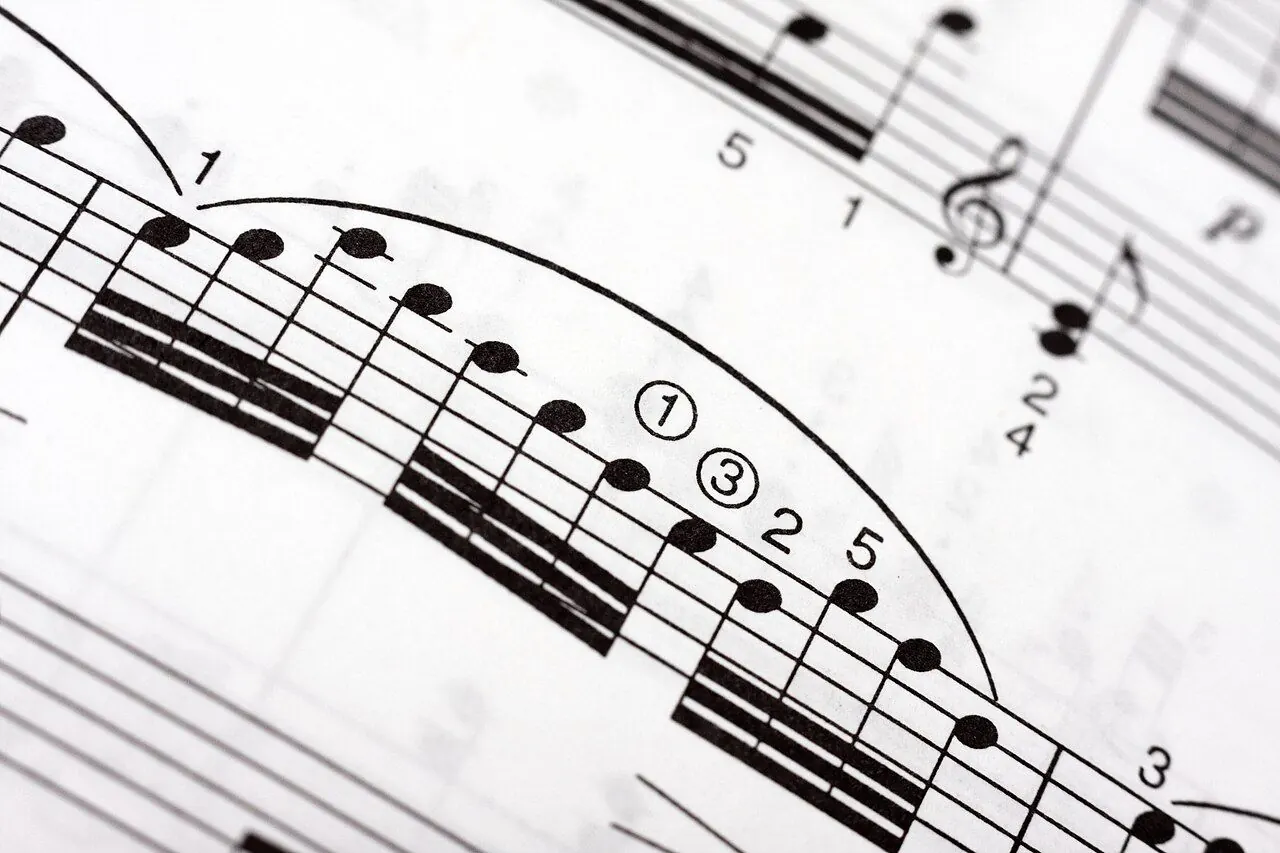
Reading sheet music means decoding two things at once: pitch, shown by where a note sits on the stave, and rhythm, shown by the note's shape. Learn the stave and clefs, the note values and rests, then time and key signatures, and simple melodies soon start to make sense on the page.
The stave, clefs and note names
The five horizontal lines of the stave (called the staff in American usage) are the foundation of pitch notation. Each line and each space between them stands for a different pitch, and notes higher on the stave sound higher. Clefs, symbols placed at the beginning of the stave, fix one line to a known pitch, giving all the other positions an easily understood reference. Notes are named with the letters A to G, which then repeat, and short extra lines called ledger lines extend the stave above and below.
The treble and bass clefs are stylised forms of the letters G and F. The treble clef curls around the second line up, marking it as G; the bass clef's two dots sit either side of the fourth line, marking it as F. Middle C sits on one ledger line below the treble stave or one ledger line above the bass stave. Mnemonics help with the rest:
- Treble clef lines, bottom to top: E G B D F ("Every Good Boy Deserves Football")
- Treble clef spaces: F A C E (spells "face")
- Bass clef lines: G B D F A ("Good Boys Deserve Fudge Always")
- Bass clef spaces: A C E G ("All Cows Eat Grass")
Note values, rests and time signatures
The rhythmic values of notes determine the timing of the music. British teaching, including ABRSM's theory syllabus, uses the names semibreve, minim, crotchet, quaver and semiquaver; American books call them whole, half, quarter, eighth and sixteenth notes. A semibreve lasts four crotchet beats, a minim two, a crotchet one, a quaver half a beat and a semiquaver a quarter. A dot after a note adds half its value again, so a dotted minim lasts three beats. Rests, the silences in sheet music, come in a matching form for every note value, from the semibreve rest to the semiquaver rest.
Together, notes and rests are organised into bars (measures), separated by vertical bar lines. The time signature at the beginning of the piece structures each bar: the top number says how many beats are in a bar and the bottom number says what kind of beat. A time signature of 3/4, for example, means three crotchet beats in every bar, and 4/4 means four.
Sharps, flats, key signatures and dynamics
Accidentals such as sharps and flats change the pitch of a note by a semitone: a sharp raises it and a flat lowers it, while a natural sign cancels either. An accidental written beside a note applies to that note and any repeats of it for the rest of the bar. When the same signs appear in the key signature at the start of each line, they apply throughout the piece, or until a new key signature replaces them. Dynamics tell you how loudly to play: p (piano) means quiet, f (forte) means loud, mp and mf sit in between, and a crescendo or diminuendo marks a gradual rise or fall in volume.
To begin reading, first learn the notes of the treble stave (or the bass stave if your instrument uses it), a few at a time, starting from middle C. Clap and count simple rhythms in crotchets, minims and semibreves before adding quavers, then put pitch and rhythm together in short, easy pieces, reading slowly and steadily rather than stopping to correct every slip. A few minutes a day with a beginner method book or graded sight-reading material builds fluency faster than occasional long sessions.